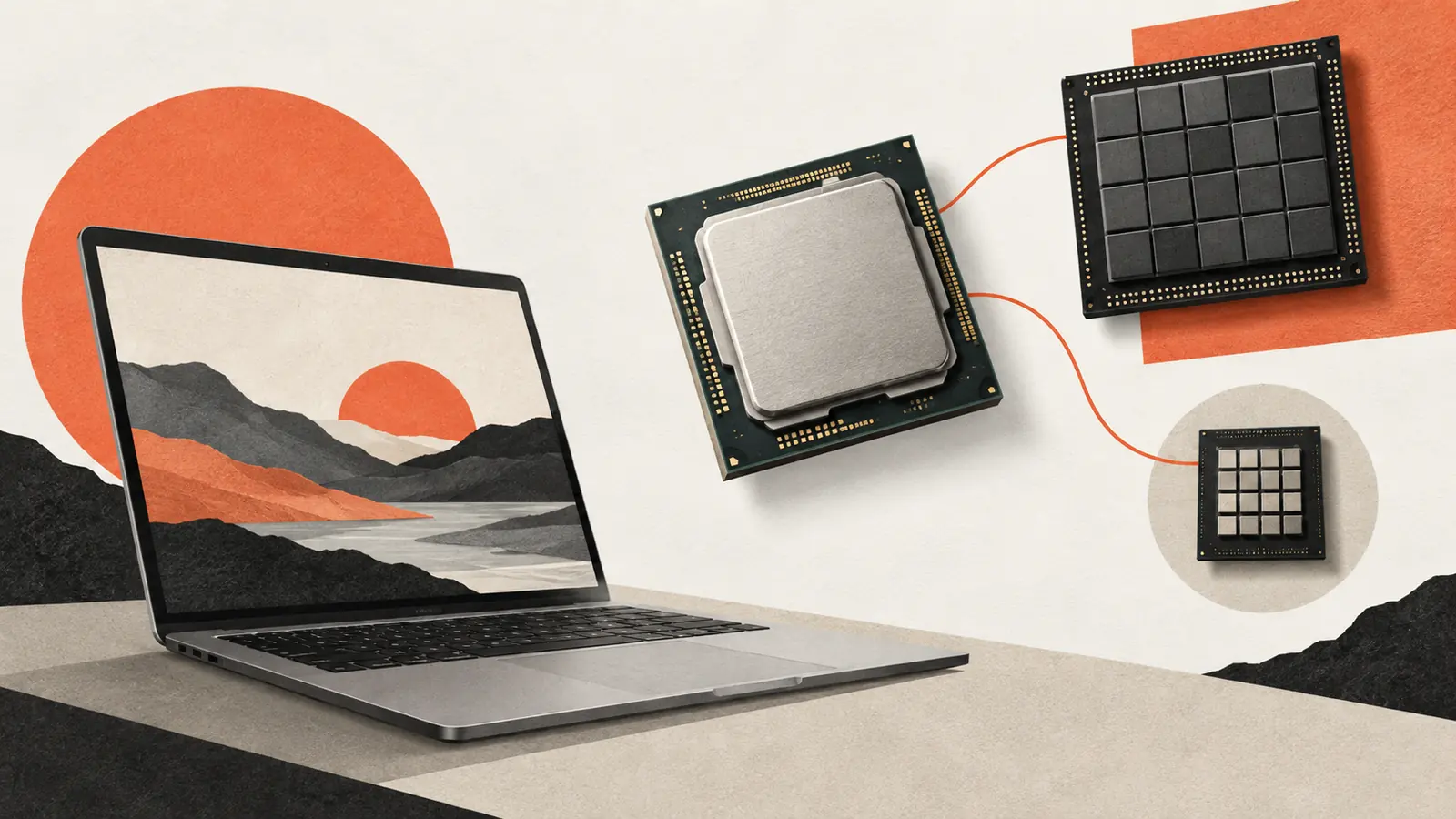
Liquid AI announced on September 23 that Liquid Context, its software for maintaining personal context on a device, is optimized for Snapdragon processors using Qualcomm’s Hexagon NPU.
The company is targeting device manufacturers. It describes software that turns permitted device signals into information about a user’s routines, preferences and needs, then makes relevant context available to the agents the user chooses.
Context and action are separate components
Liquid Context maintains the information used to personalize an interaction. A connected agent uses that information to reason or act, subject to permissions. The company says those agents can run locally, in the cloud or across both environments.
That distinction matters for the privacy claim. Keeping the context layer on the device does not mean every connected agent or every resulting action stays there. The scope of shared information and the destination of each request remain part of the product’s permission model.
In its announcement, Liquid AI gives examples such as preparing schedule changes after a family message or assembling a recap from permitted photos and events. These are illustrative experiences, not evidence that all such features are shipping on existing phones.
The NPU is part of the integration
Liquid AI says efficient background execution is important because personal context needs to stay current. It has optimized both the context layer and, separately, the LFM2.5-2.6B model used by Liquid Agent for Hexagon.
Liquid Agent is the company’s embedded agent offering for manufacturers that want to build their own experience. A device maker can also use the context layer with other compatible agents, according to the announcement.
The release does not provide independent battery-life measurements or a broad consumer rollout schedule. Hardware optimization establishes an integration step; it does not establish the behavior of every finished device.
What to watch in actual products
The useful checks will be which signals a device collects, how users grant and withdraw access, what leaves the device and which actions require approval. Our NPU explainer describes why application support matters alongside the chip itself.
For manufacturers, the proposal offers a shared source of context across agents. For users, its value will depend on how clearly the finished interface explains and controls that sharing.