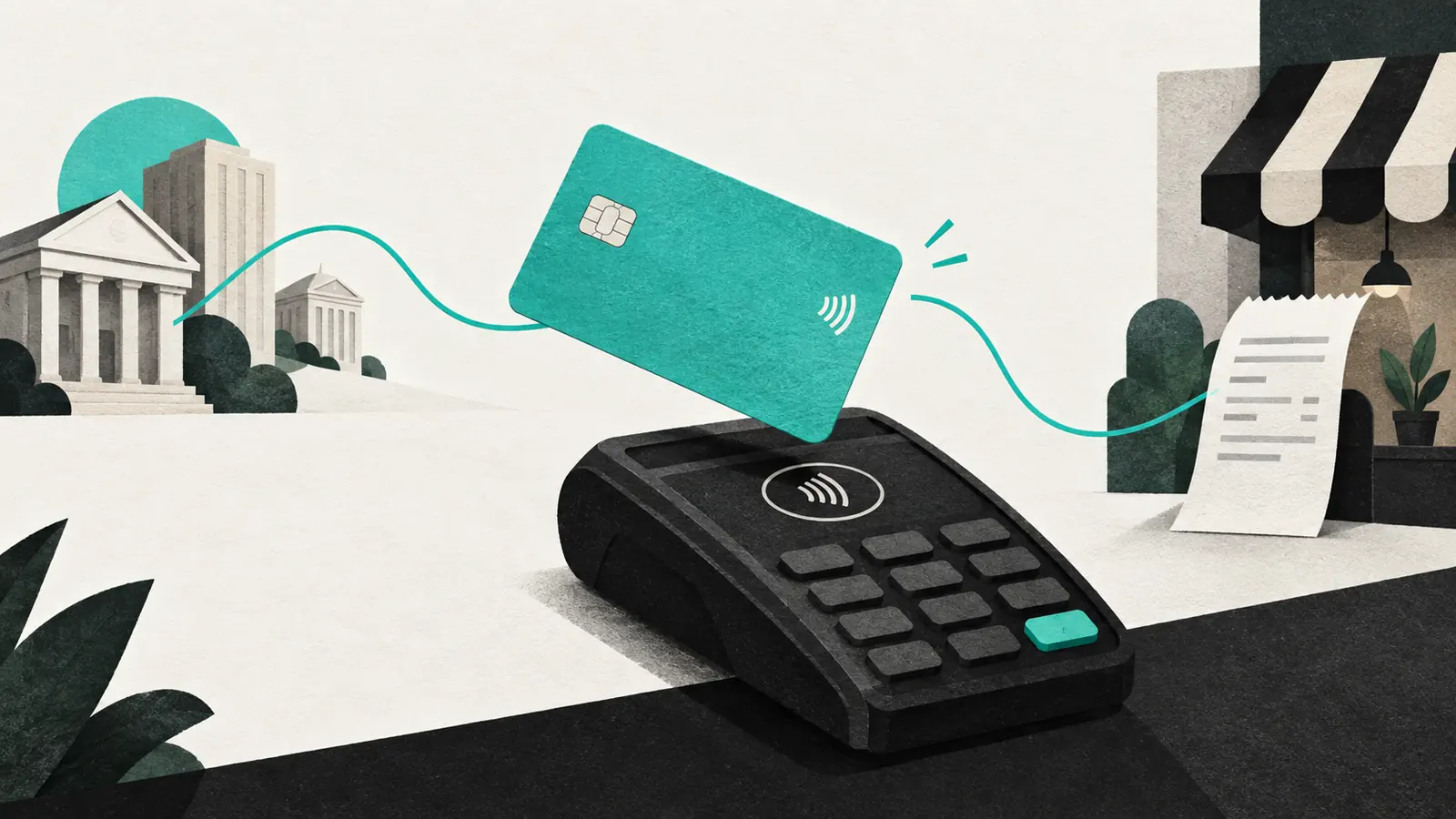
The terminal beeps, the receipt prints and you leave with your coffee. Your banking app may show a pending payment almost immediately. The café, however, may receive its payout later. Both displays can be correct because they describe different stages of the payment.
A card purchase involves messages, records and money moving through several participants. An approval tells the merchant that the issuing bank has authorized the transaction. It does not mean that the merchant’s bank account already contains the proceeds.
The exact route depends on the card scheme, processor, bank and transaction type. For an ordinary card purchase, the useful distinctions are authorization, capture, clearing, settlement and payout.
Authorization answers the checkout question
The merchant sends a request through its payment provider and the relevant card network to the bank that issued the card. The issuer checks the request against factors such as available funds or credit, card status and its risk controls.
If approved, the issuer commonly places an authorization hold. That can reduce the amount you can spend while the transaction remains pending. A hold is a reservation, not a second purchase waiting to happen.
Stripe’s explanation of authorization and settlement describes this separation between the initial approval and the later movement of funds. The provider, acquirer and network can appear as several organizations or as bundled services from the merchant’s perspective.
A mobile wallet adds another detail. It can present a tokenized card credential rather than the underlying card number. That changes how the payment credential is represented, but it does not eliminate the later clearing, settlement and payout stages.
Capture tells the system what to collect
Capture is the merchant’s instruction to collect an authorized amount. Some purchases are authorized and captured together in the merchant’s software. Others deliberately separate them.
A hotel may authorize an estimated amount before the final bill is known. An online seller may wait until goods are ready to ship. The rules and permitted timing vary, so a pending amount should not be read as a universal promise about the final amount or capture date.
If an authorization is not captured, it can expire or be released. The time it remains visible depends on the circumstances and the issuer. A merchant saying it cancelled a hold does not necessarily make the bank’s display update immediately.
This also explains why a pending line and a completed line can briefly appear together. They may refer to stages of one purchase. If both become final charges, or an unfamiliar charge persists, check the transaction details with the merchant and issuer rather than assuming the display alone establishes the cause.
Clearing and settlement reconcile the payment
Clearing exchanges the transaction information needed to calculate what participants owe. Settlement moves the corresponding funds between the institutions involved, often on a net basis across many transactions.
These operations do not have to happen at the moment the terminal approves a purchase. A merchant may submit transactions in batches, and different payment arrangements use different schedules. Weekends, currencies, cross-border processing and risk checks can affect the wider timeline.
Fees are another reason the merchant’s eventual amount differs from the customer’s purchase. The merchant’s processing agreement may include network and issuer-related costs, the provider’s charges and other applicable deductions. A single advertised percentage does not describe every merchant’s contract.
For a reader, the point is to identify whose balance is being discussed. A cardholder’s available balance, a provider’s merchant balance and the merchant’s bank balance are separate records.
Payout reaches the merchant’s account
After a payment is recorded in the merchant’s provider balance, the provider may send a payout according to the merchant’s schedule and eligibility. Reserves, disputes, refunds or reviews can affect the available amount.
An instant checkout experience therefore does not imply an instant bank payout. The same distinction applies to newer payment methods: a stablecoin payment can complete on a blockchain while conversion or the merchant’s bank transfer remains a separate step.
Merchants comparing providers should ask about availability and payout, not just authorization speed. A service can process approvals quickly while holding proceeds for a longer period. Conversely, a provider can offer faster access to funds under specific conditions or for an additional charge.
Refunds and disputes travel back through the system
A refund is a new instruction returning money after a purchase. It is different from cancelling an authorization before capture. That difference helps explain why a refund can take time to appear even when the merchant has initiated it.
A dispute involves the cardholder and issuer challenging a transaction under the applicable card rules and legal framework. A completed payout does not make a merchant immune to a later dispute or adjustment.
Keep the receipt, the merchant’s confirmation and the bank’s transaction reference when resolving a problem. They help establish the amount, date and stage being discussed. If currency conversion is involved, compare the actual amounts and rates as well; our guide to transfer costs explains why a headline fee rarely tells the whole story.